
 Drum Atlas
Roland SH-101
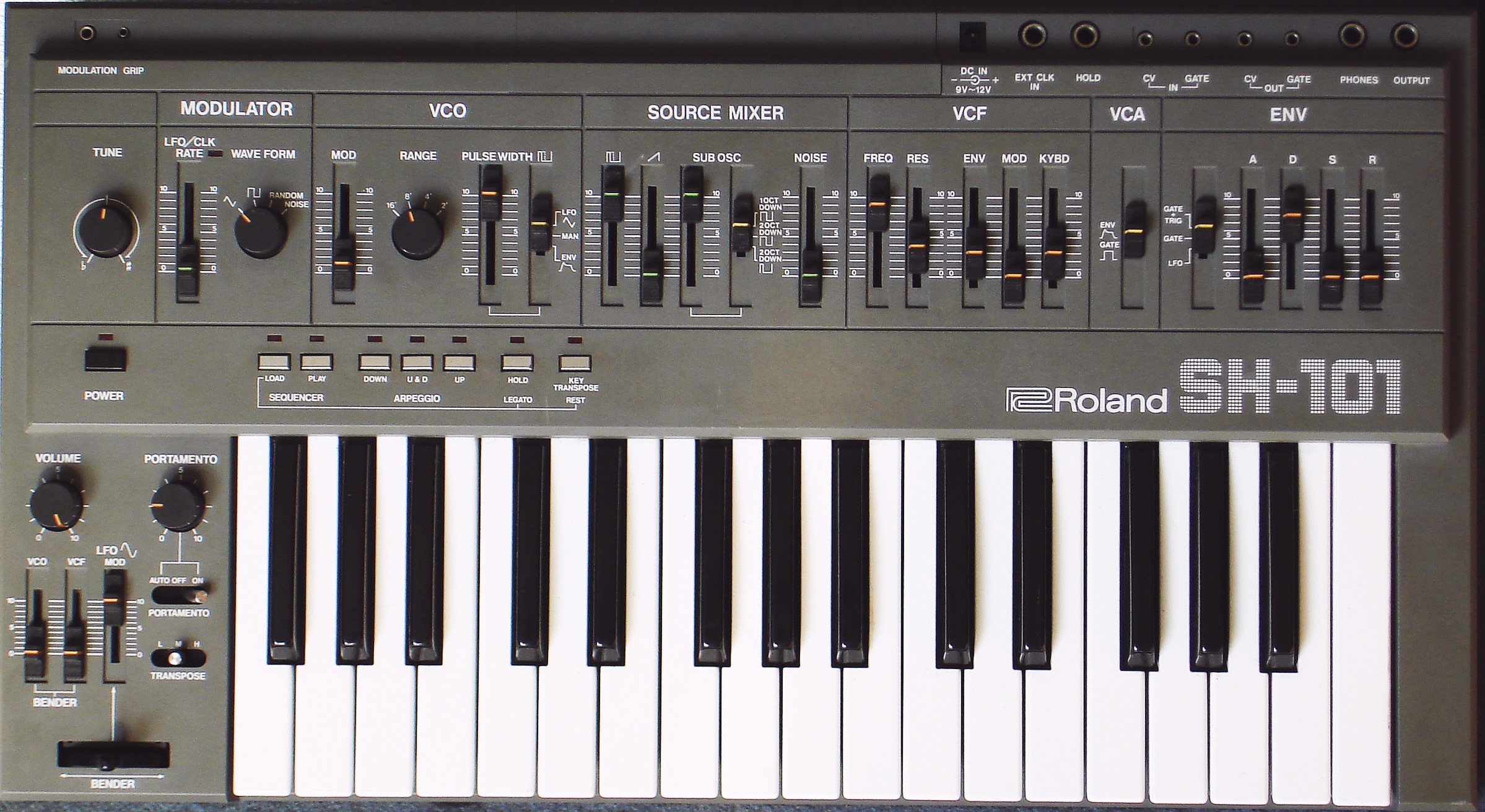
One voice, four mixable sound sources and a sequencer for bass lines.
Roland introduced the SH-101 in 1982.
- Voices
- 1
- Keys
- 32
- Sound design
- 1 VCO
- Introduced
- 1982
Sound & character
The SH-101 plays one note at a time. Pulse, saw, sub-oscillator and noise are blended in the Source Mixer. Filter and envelope shape that simple starting point; portamento lets notes glide.
Model & versions
Roland introduced the SH-101 in 1982. This dossier covers the original 32-key instrument. SH-01A and Roland Cloud are later digital recreations with different connections and features.
How the sound works
Choose a section and discover what it does.
Oscillator
The VCO provides pulse and saw waves. PWM changes pulse width.
What to checkTry the waveforms separately.
Open the manual ↗Explore in depth
Four sources, one note
The mixer makes one oscillator versatile: add sub for a lower layer or noise for a grainy attack. This is not a four-voice synth.
Hands-on rhythm
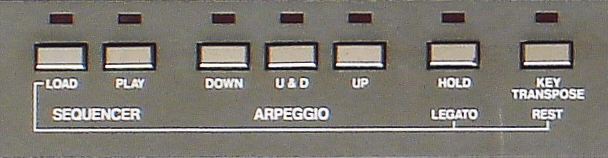
The sequencer holds up to 100 steps. The arpeggiator cycles played notes in three directions. Test each separately, then try keyboard transposition.
Envelope and glide
Short decay and low sustain articulate differently from long connected notes. Portamento sets pitch glide; auto mode makes legato playing relevant.
Original or SH-01A?
The original SH-101 uses CV/Gate. Check modifications separately. The digital SH-01A has different capabilities; its specifications do not describe the original.
Try listening yourself
A short listening exercise on the instrument. Use a copy of your sound and change one setting at a time.
- Start with saw only, then add just the sub-oscillator.
- Use pulse and compare manual pulse width with slow PWM.
- Play the same notes with portamento off, then on.
An editorial exercise, not our own listening test or a built-in audio demo.
Specifications & sources
- Keys
- 32
- Voices
- 1
- Sound source
- 1 VCO + sub + ruis
- Control
- CV / Gate
- Sequencer
- 100 stappen
- Arpeggiator
- Up / Down / Up & Down
- Power supply
- 6 batterijen / PSA-adapter
Sources checked: 7 October 2026.
This dossier covers the original hardware. Controls and technical data are based on manufacturer documentation; buying checklists are our editorial suggestions. No in-house listening test or valuation.
Experiences & questions
Loading experiences…
Explore more
Vintage Corner →
JUNO-106
One oscillator per voice, six voices and a chorus that widens the sound.
Open dossier →